

Haga clic aquí para ver esta publicación en Español.
Folks… we’re getting excited! We’ve only just started promoting and we’ve already heard from a few people keen to join us. As a reminder, if you want to get involved, the first step is to fill out this form.
On the last part of our journey we made two new friends, Gerther and Hélène, from the permaculture project La Casa del Protector. This February they’ve been away travelling, and they kindly offered to share their home with us in their absence – a secluded house in the intentional community and ecovillage Tierra de Bosques, on the northern edge of the Oxapampa Valley in the Pasco region.1
We’ve been taking advantage of the peace and quiet to prepare for the final launch of El Pilote in March. One thing we’ve been reflecting on is the principles we’d like to live by. Drawing on the FEC values for egalitarian communities, as well as our own experiences, we’ve put together the following list, which we hope to revise and improve with the help of our friends, readers, and future members.
Material Equality. We hold land and buildings in common. Any income a member receives while living in the community is owned by the community. Members give labour time to the community equally, or per their ability. Members receive resources from the community equally, or per their needs. There will never be a fee to join.
Social Equality. We are working to establish the equality of all people and do not permit discrimination on the basis of race, role, class, education, language or style of communication, appearance, creed, ethnic origin, age, ability, sex, sexual orientation, gender identity, or any other characteristic.
Shared Agreements. We have clear, written agreements setting out community processes, including membership decisions, conflict management, governance, labour organisation, and finance. All members can participate in creating and improving these agreements.
Secularism. We are not collectively committed to any spirituality or religion, and we value diversity of thought. Members may follow any belief system they wish to, or none.
Abundance. We aim to live healthy and fulfilled lives, meeting as many of our physical and nonphysical needs as possible with minimal environmental impact. We work to achieve this beyond a materialist culture, including by seeking diversity. We try to keep our per-person expenditure (excluding investment) below the Peruvian minimum wage.
Regenerative ecology. We seek to live in a way that restores the health and diversity of ecosystems, conserves or replenishes natural resources for future generations, and promotes a regenerative culture.
Growth. We invest time and resources in building a wider movement for communal and sustainable living.
Transformation. We work to free ourselves from harmful social conditioning at the individual and collective levels, unlearning destructive patterns in our relationships with each other and with our world. As part of this, we cultivate direct and transparent communication.
Culture of Peace. We avoid the use of violence, and we cultivate other methods to manage conflict.
For each principle, we’ll share our thoughts on what it means to us and how it fits into our vision.
Material Equality
We hold land and buildings in common. Any income a member receives while living in the community is owned by the community. Members give labour time to the community equally, or per their ability. Members receive resources from the community equally, or per their needs. There will never be a fee to join.
Here, we’re inspired by Twin Oaks (the first intentional community Ian ever visited, way back in 2011). We had an opportunity to spend three months in Twin Oaks in early 2025 and learn more about the details of their egalitarian model. One of its fundamental principles is that an hour of work is worth an hour of work. Everyone who can do so works the same number of hours each week. It doesn’t matter whether you’re washing the dishes or negotiating large contracts for a community business, each person’s contribution is valued the same.
As an international couple, economic inequality has been a concrete reality for us. Starting in March, each of us will be working to bring in money for the project, but one of us will earn in three days what the other earns in a month. This doesn’t reflect a difference in talent, effort, or commitment, only our different circumstances and opportunities. Our access to education, our networks of contacts, our native languages, our countries of origin (and the strength of their currencies), and the context of our upbringing – all this has a profound impact on our economic power. Under capitalism, each of us has a different starting point: the market rewards privilege and social position as much as effort and virtue.
We think this is contrary to social justice, and we aim to create an economy in which everyone’s needs are met equally, regardless of their earning power – a culture that values human wellbeing over the accumulation of individual wealth. Following Twin Oaks, our labour system will recognise types of work that are socially vital but rarely economically rewarded: cooking, cleaning, caring for children and the elderly, inner work, activism, making art, and planning parties.
Since we don’t want to scare everyone away, we should probably add that we don’t plan to share everything, as in the stereotype of the 1960s commune. We don’t think there’s anything wrong with having a few personal possessions, and nobody is going to communalize your toothbrush. Anything you can fit in your room is yours. What’s important to us is that all of our members have a similar quality of life. This means we’ll share resources with the potential to create large inequalities (e.g., cars).
Social Equality
We are working to establish the equality of all people and do not permit discrimination on the basis of race, role, class, education, language or style of communication, appearance, creed, ethnic origin, age, ability, sex, sexual orientation, gender identity, or any other characteristic.
Our paths through the world are influenced by how we are seen – by how the societies we live in interpret and categorise us. This is clear globally, in the many countries where differences in race, gender, religion, and nationality have exploded into horrific violence. We’ve also seen the same dynamics unfold at a personal level. Claudia’s experience, as a brown-skinned Peruvian woman who has also been a migrant and a single mother, has been marked by the need to adapt in spaces where she has been viewed as an outsider, or judged before being understood. These dynamics are difficult to untangle using words, and we often prefer to approach them through other means.
Reflecting on our own experiences and those of the people we love, we don’t think the challenges come from an individual’s origin, skin color, gender identity, or accent. They come from social frameworks that classify and rank people without getting to know them – from how expectations are assigned, invisible limits imposed, and justifications demanded. We have often observed, with sadness, the racism that can be involved when one person sees another as “culturally different”: often, this means lower expectations and doubts about their competence, or surprise when they turn out to be well prepared. Attitudes are communicated through gestures, silences, and assumptions. As Toni Morrison put it: “[racism] keeps you explaining, over and over again, your reason for being. Somebody says you have no language and so you spend 20 years proving that you do.”
In building an egalitarian community, we want to learn to recognize these patterns; to make them visible, lovingly and with care; and gradually dismantle them. We know this will be a long road, and perhaps an endless one. It means challenging deeply ingrained attitudes and beliefs, questioning behaviors that many parts of society consider normal, and recognising the limits of our understanding of the experiences of others.
Two of our other principles will be crucial for this work. Our commitment to shared agreements means creating processes that are the same for everyone, regardless of who they are. Meanwhile, our commitment to transformation means working on the patterns and assumptions that live within us, often without us knowing it. By taking these steps, we hope to create a space that honours diversity, where children can grow up feeling equally valued, and where no-one has to make an extra effort to prove that they belong.
Shared Agreements
We have clear, written agreements setting out community processes, including membership decisions, conflict management, governance, labour organisation, and finance. All members can participate in creating and improving these agreements.
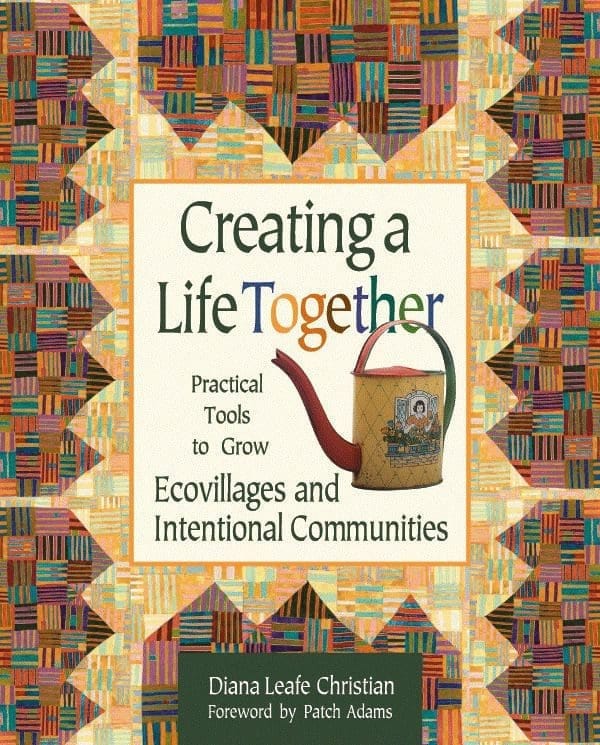
Here, we’re inspired by the book Creating a Life Together by Diana Leafe Christian. Christian notes that many communities fail, despite the best of intentions, due to the absence of clear structures from the beginning. Setting expectations in advance can’t prevent all of the difficult moments, but it can make the toughest decisions easier and kinder. As our friend Keenan, a Twin Oaker since the 1980s, noted, sometimes a community member is no longer a good fit – it would be better both for them and for the community if they moved on. Without a fair procedure for asking them to leave, a damaging situation can continue for years. Or, frustrated by the lack of options, other members might turn to coldness or bullying to push them out.
While we were living at Braziers Park, we saw how conflicts can be worsened when a community lacks a well-designed conflict process in which everyone can feel heard. One of the things Ian worked on at Braziers Park was revising the community’s conflict management policy to give those in conflict space to listen to each other, seek ways to live together more easily, and manage the impact of the conflicts on the wider group.
In our experience, agreements are a form of mutual care and a tool for equality: processes for joining, taking on responsibilities, and, if necessary, leaving, must be transparent and fair, regardless of each person’s background. We’re also aware that agreements alone are not enough to sustain a peaceful and egalitarian community. They can provide a foundation, but we also believe in an ongoing commitment to personal and collective transformation.
Secularism
We are not collectively committed to any spirituality or religion, and we value diversity of thought. Members may follow any belief system they wish to, or none.
One of the insights we take from both Braziers Park and Tamera is that no one person can see the whole truth. The deepest understanding is carried by the group as a whole, revealed as our individual points of view interact with and challenge each other. We think a community is at its strongest when it consciously creates space for this (through processes like Tamera’s Forum and Braziers Park’s weekly Sensory meeting).2 For this reason, we never want to become a cult, where everyone is forced to share the same views or follow those of the leader. Even our basic principles will always be up for discussion and revision.
For us, being a secular community means welcoming people with all spiritual perspectives and recognising a variety of sources of knowledge. This includes treating indigenous beliefs and practices with respect, and we will be careful about borrowing from them without a clear understanding of their meaning.
Abundance
We aim to live healthy and fulfilled lives, meeting as many of our physical and nonphysical needs as possible with minimal environmental impact. We work to achieve this beyond a materialist culture, including by seeking diversity. We try to keep our per-person expenditure (excluding investment) below the Peruvian minimum wage.
In nonviolent communication, needs are “the conditions human beings require in order to thrive”, and are viewed as universal. Although there are other ways of thinking about thriving,3 we feel this definition helps to distinguish things that are truly vital for us from things we may happen to desire. The Centre for Nonviolent Communication gives many examples of needs, including:
Food
Water
Movement
Touch
Beauty
Growth
Appreciation
Purpose
Belonging
Contribution
Humour
Sexual expression
Creativity
Integrity
Love
In defining abundance, we start from this needs-based picture of the human being. Meeting most of our needs requires community and connectedness, and it’s hard to read this list without feeling sadness about the priorities of materialistic societies. While some needs do require physical resources, we’re also focused on abundance for needs that can only be fulfilled by relationships.
For us, this implies a commitment to diversity, in a sense closely related to our perspective on ecology. The more different kinds of people we have living together, the more possibilities we have to learn from each other, challenge each other, support each other, work together, and celebrate together. We think that an abundant life is a joyful life, and we’re suspicious of work that cannot be done joyfully, which might suggest that our culture is becoming disconnected from needs.
We’re suggesting a spending limit as part of this principle for three reasons: we want to pursue abundance sustainably, we want to live in a way that is accessible to most people, and we want to live in economic solidarity with the majority of Peruvians.4 For the pilot project, this will be a guideline rather than a strict commitment. This doesn’t mean we don’t care about money. We’d love to get rich (if you fancy donating please write to us 😛), but mainly so we can invest in growing the communities movement, pursuing social transformation, and regenerating our environment.
Regenerative Ecology
We seek to live in a way that restores the health and diversity of ecosystems, conserves or replenishes natural resources for future generations, and promotes a regenerative culture.
At the end of 2025, we spent two months at the Chaikuni Institute and participated in a dynamic agroforestry workshop led by Fortunato Velázquez, where we learned how permaculture principles and agroforestry can support the regeneration of the Peruvian Amazon. While many communities around the world use slash-and-burn farming methods that destroy local ecosystems and rapidly reduce the fertility of the land, regenerative agroforestry takes a very long-term view, seeking to maximise density and diversity. This involves planting a mixture of species that flourish at different levels and for different periods of time, an approach that recreates the natural dynamics of the forest, replacing an extractive system with a life-sustaining one. While many of these species can be harvested by humans, this whole-systems approach also recognises the value of facilitator species that nourish the soil and protect and support primary crops. Over time, diversity and cooperation make the system more resilient, fertile, and abundant.
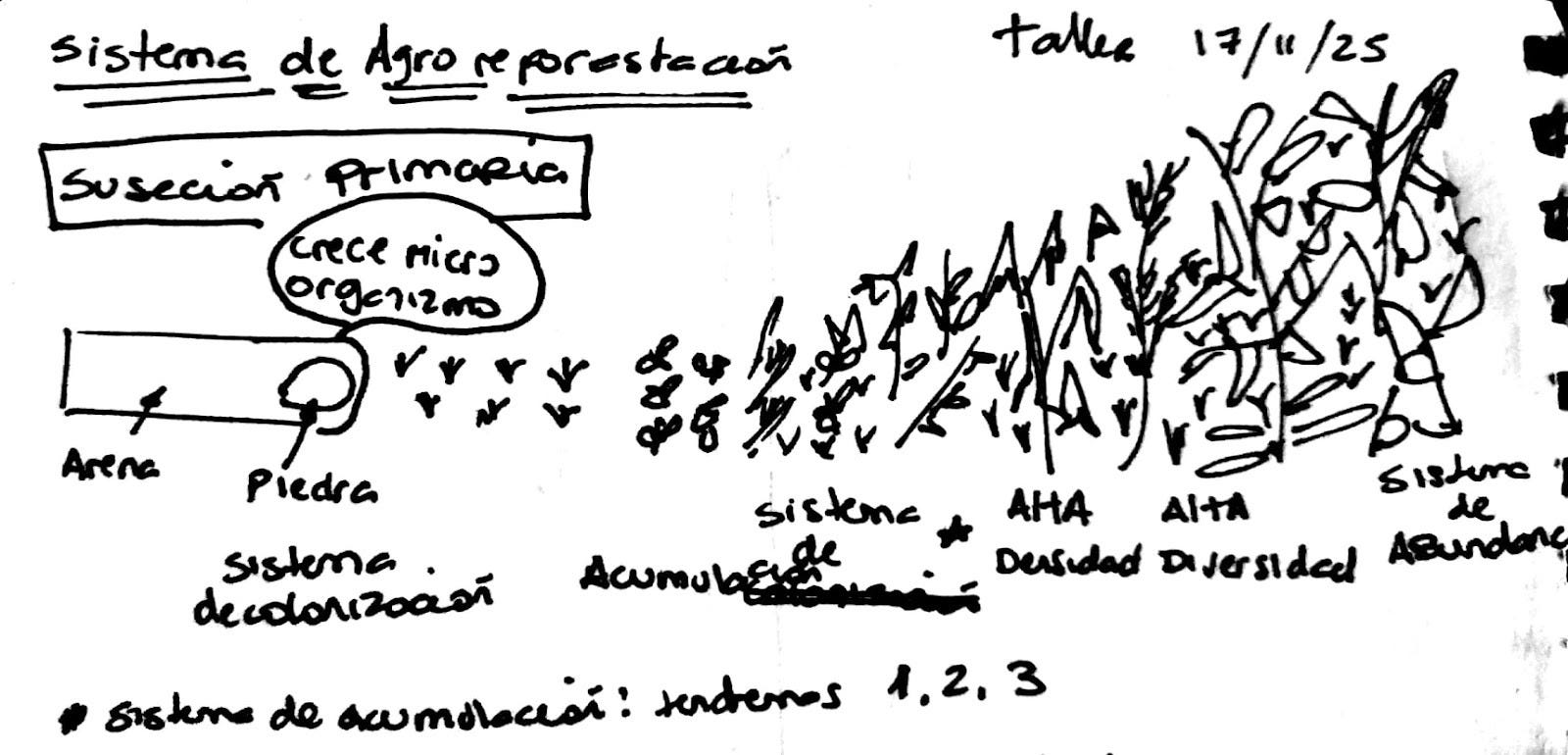
We think something similar happens with human beings. Just as the forest needs distinct species that can complement each other, human communities flourish when they contain a diversity of talents, rhythms, and sensibilities. Unfortunately, our society is often oriented towards homogeneity – following the logic of the monoculture, where everyone is expected to work and produce in similar ways. We know that such monocultures, sooner or later, degrade the soil that sustains us. In seeking an abundant culture, perhaps we are simply recovering the diversity that has always been part of our nature.
While we don’t yet know what kind of land we’ll be building our community on, we hope to adopt this perspective for our land management, recognising that we are not separate from nature and that our interventions can regenerate ecosystems if we design our lives with that in mind. For this reason, we’re considering founding the community on previously degraded land.
Growth
We invest time and resources in building a wider movement for communal and sustainable living.
We think that many, many people would be happier living in community, and that the natural world would be better preserved if more people chose this way of life. Sadly, it is rarely considered as a real option. Many people have not heard of it at all. Others think of it as something that ended in the 1960s, or have a picture in their mind that has little to do with reality.
We believe there are many reasons to think again, especially sustainability and efficiency. In the city, twenty families might own thirty cars between them. A community of the same size might share eight, and never feel the need for more. The same applies to washing machines, blenders, drills, hoovers, and all kinds of other things that we only use occasionally. Co-operating in this way saves energy and resources. It also saves work: instead of twenty people cooking alone each day, a group of two or three might cook for everyone, freeing up time for other things.
Besides appliances, living in community means sharing the sources of happiness. With more hands to help, and more minds to bring knowledge, skills, and ideas, the possibilities expand enormously. There will be more opportunities for art, music, dance, theatre, film clubs, board games, trips out, exercising together… we could carry on all day. There will be opportunities to do things you might never have considered, like cultivating mushrooms, designing musical instruments, or choreographing a dance for a community play. Or, if you have skills to share, your support might be the push someone else needs in order to create.
One comment we hear regularly, especially in the West, is “I couldn’t live without privacy.” In reality, in most of the communities we have visited, each member or couple has their own room, and rural communities also offer the solitude of nature. We’ve even been in communities where every member has their own house! Another stereotype is that communities are full of social dropouts that refuse to work, possibly using lots of drugs and alcohol. Such groups might exist, but they rarely last. Most communities that survive over the long term have cultures that encourage accountability and challenge harmful behaviours.
To us, what the communities movement needs most right now is positive but realistic publicity, bringing communal living back into mainstream consciousness while challenging the stereotypes. We’ve contributed to this in the UK by creating the UK Communities Conference, which will celebrate its fifth anniversary this year. We’d love to participate in South American communities events like Call of The Mountain, and perhaps eventually organise our own. As our community expands, we also dream of growing the movement through books, podcasts, articles, and documentaries, as well as an active social media presence.
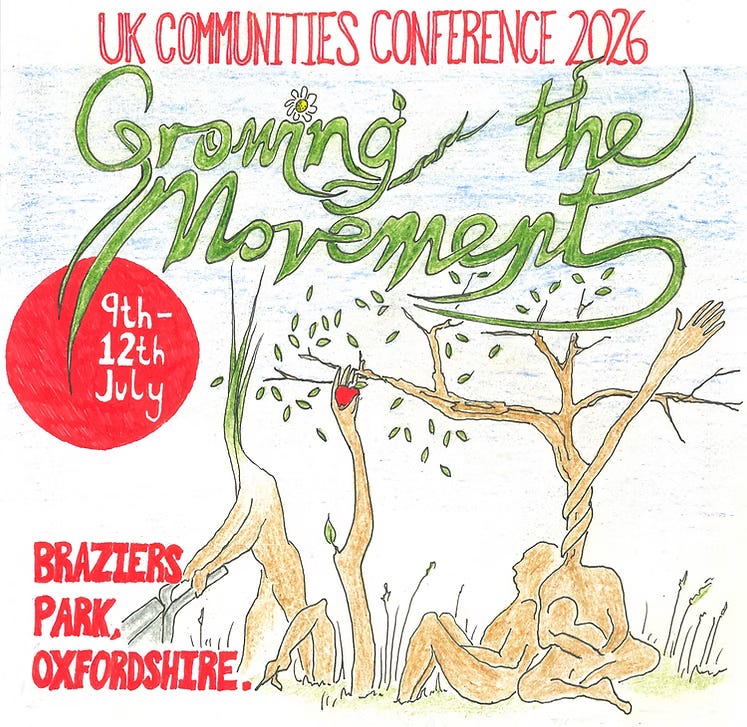
If communal living does become more visible, we expect to see more people wanting to live in community. This means there will need to be more communities! We will invest our spare resources to help create these, and support others who are doing so.
Transformation
We work to free ourselves from harmful social conditioning at the individual and collective levels, unlearning destructive patterns in our relationships with each other and with our world. As part of this, we cultivate direct and transparent communication.
Here, we’re inspired by Tamera’s work to model a new culture. The insight of its founders, including Dieter Duhm and Sabine Lichtenfels, is that our struggles are never just about us. If you look deeply enough into any personal problem, you will see that it has been created within a wider social field that affects us all; our individual wounds are inseparable from our collective history. One person’s jealousy might reveal patriarchal structures in society, while another might struggle to express themself because they have repressed their playfulness to function better in a competitive system. A third might feel uncomfortable speaking publicly in their native language or accent because racist attitudes in their society assign this language less value.
This means healing is a political act, and necessarily collective. Tamera approaches this by creating a culture of radical transparency. By being as open as possible about your feelings and the reactions other people trigger in you, you reveal the wider patterns that are living through you and take the first step towards changing them. One of the community slogans Ian heard at Tamera was, “In a broken society, the longing for healing is a revolutionary force.” This can also be described as living with an open heart, since hiding what we feel is one of our main defences against change. In order to stay comfortable with our established values, judgements, patterns, and ways of life, we must blind ourselves to the harm we do to each other and the wider world.
Tamera and its sister community, ZEGG, have developed various practices for opening the heart and encouraging transparency, of which the best known is Forum – a space where participants perform their experiences to a group, who then share their observations or “mirrors”. One of the things processes like this reveal is that our social conditioning goes beyond our minds and our abstract belief systems. It is ingrained into our bodies, the ways we move and speak, and how we perceive the world. Recognising this, Tamera has developed tools based on art, dance and theatre to explore transformative experiences (traumatic, liberating, shameful, joyful, etc.) without getting stuck in fixed interpretations (e.g., identifying solely as the victim).
We learned some of these techniques on Tamera’s 2024 SD⁴Arts course,5 and we’ve also explored other tools for transformation. In October last year, we participated in a two-week camp at El Juego, a community that has developed various games and other processes focused on the resolution of conflict, starting from the question “what is the worst in me?” These approaches can lead to intense conversations and emotional honesty that might, in other situations, seem excessive, allowing us to reconsider our deeply held beliefs and recognise the shadows in us. We hope to use the techniques we’ve learned on our travels, as well as practices offered by other participants, to create a transformative culture in El Pilote.
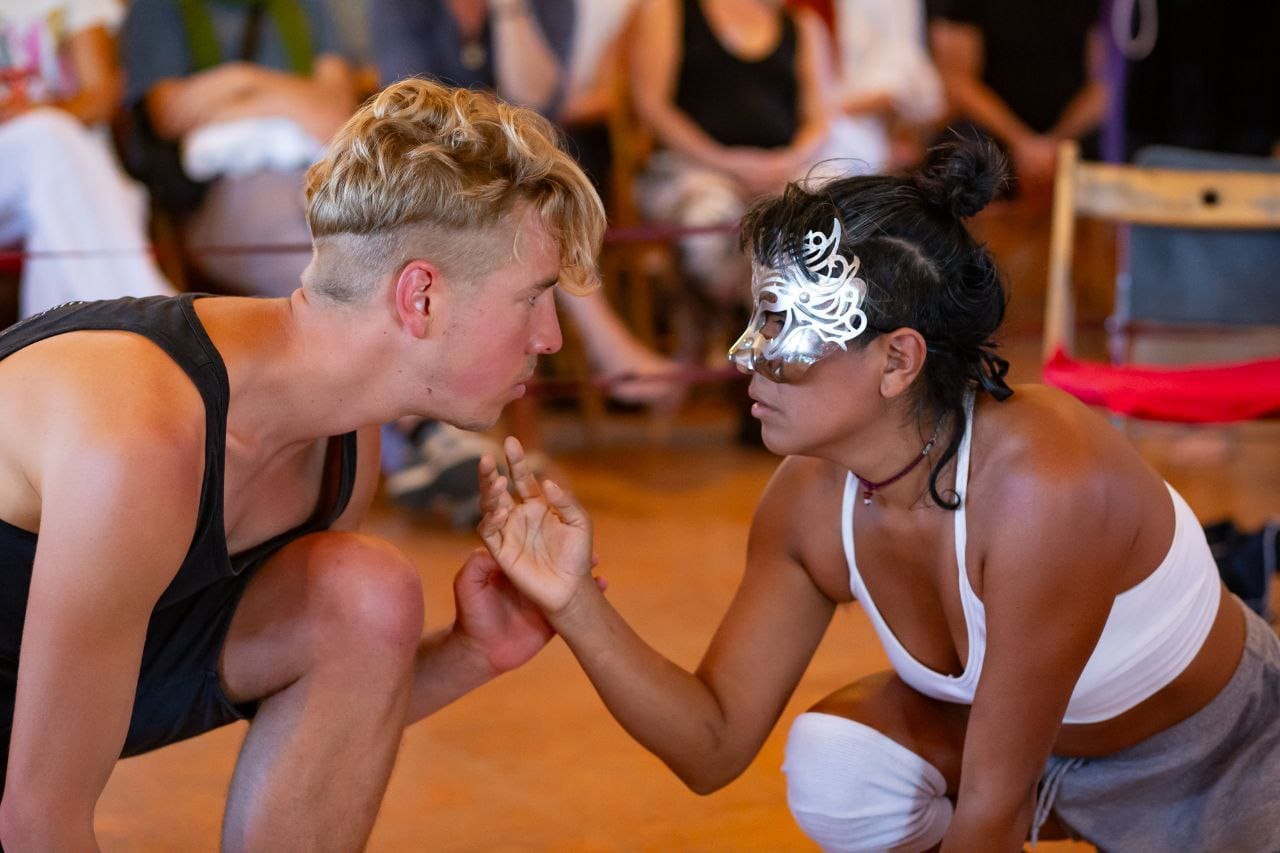
These approaches can be intense, emotionally demanding, and uncomfortable, and for many they might feel a step too far. Since we want to create a community where anyone can feel at home, we’re also interested in more accessible spaces of transformation. This could include sharing circles, Sensory meetings, and smaller discussion groups, in which everyone can participate and advance at their own pace.
Culture of Peace
We avoid the use of violence, and we cultivate other methods to manage conflict.
Every nation’s culture has been shaped by its experience of violence. In living memory, attempts to change Peruvian society have been linked to horrendous atrocities and human rights violations. In 2005, as part of a student group reflecting on Peru’s Truth and Reconciliation process, Claudia traveled to Ayacucho, the region most affected by terrorism, to interview residents about abuses committed by terrorist groups and the state. Hearing their stories, about the profound impact of violence on them and their communities, has cemented our commitment to a different path.
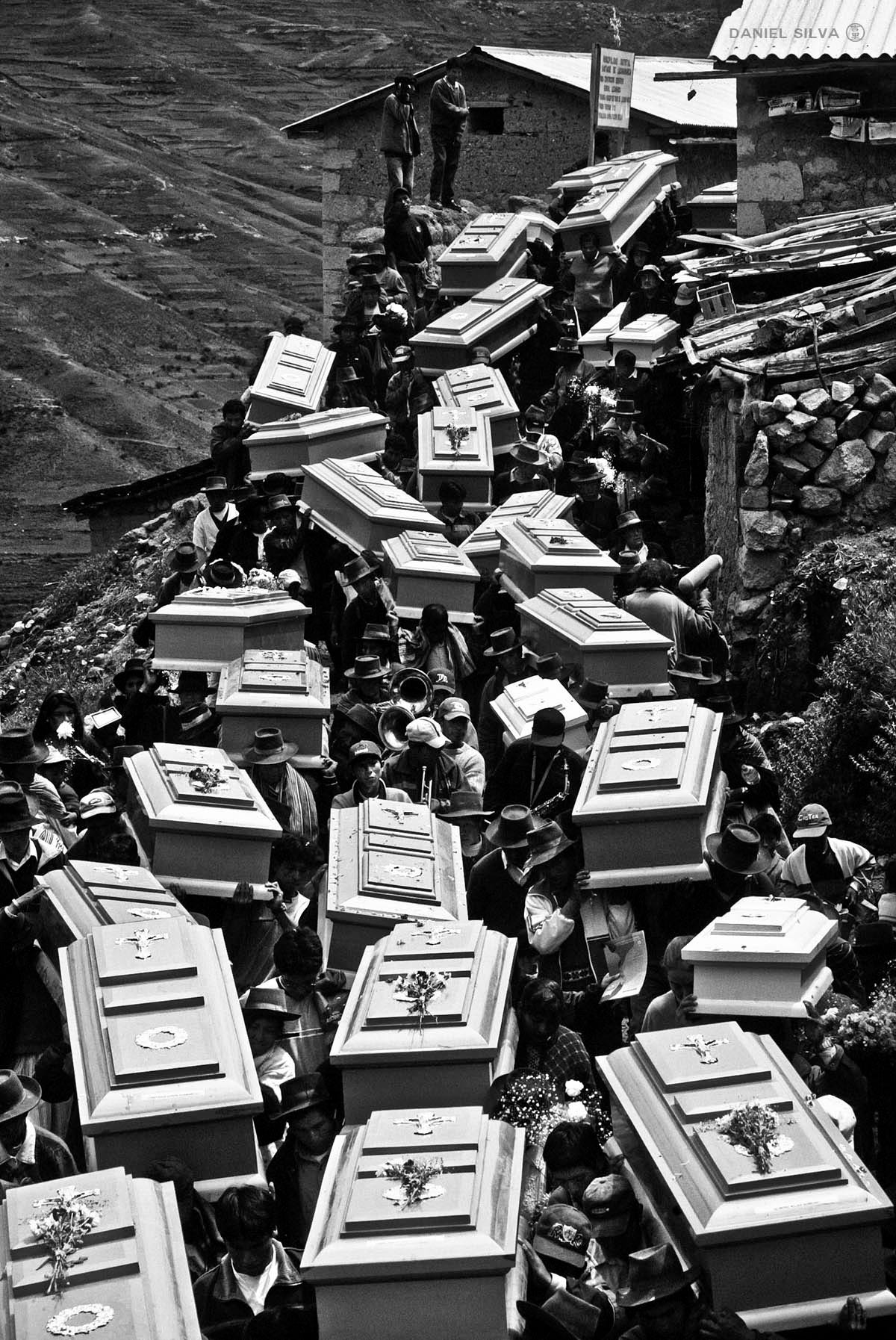
This reality is not limited to Peru. Globally, the use of violence continues to have painful consequences. Wars undertaken in the name of democracy or national security are causing mass displacement and immeasurable suffering. In the past few years, the war in Ukraine and the Israel–Palestine conflict have led to tens of thousands of deaths and generations marked by fear and resentment. In many countries, including the United States, the criminalization and persecution of migrants has shattered families and entrenched social divisions.
History shows that reconciliation after violence is a monumental challenge, but it is a path that many countries have managed to walk, almost always through democratic processes involving all parties to the conflict. In our experience, conflicts in intentional communities follow similar dynamics on a smaller scale: by developing processes for reconciliation and co-existence, they can serve as a model for a wider culture of peace.6 For this reason, nonviolence is closely linked to the principles of transformation and shared agreements.
Maintaining a stance of nonviolence doesn’t mean diminishing the historic struggles of people, including indigenous communities, who have resorted to violence to protect themselves, their families, or their livelihoods. Nor does it mean remaining passive in the face of injustices and indignities. It is a commitment to denounce, accompany victims and perpetrators, and transform, without reproducing the same culture of aggression. In today’s world, this choice can be perceived as a privilege, since not everyone can act nonviolently without risk. Our wish is that it ceases to be a privilege and becomes a real and accessible right for all people.
We will work for this to be a collective guarantee within the community by refraining from all physical violence, except in cases of immediate self defence. We also believe in minimizing the pain caused by our words, although not at the cost of directness and transparency.
Closing Thoughts
Putting together this list hasn’t been easy. We argued, edited, re-edited, argued again, and edited some more. At times, talking about and researching these topics brought us close to tears. And so far it’s still just the two of us! 🙃
If you feel resonance with what we’ve shared, here’s the link to join us. Or… perhaps you violently disagree. Either way, we’d love to hear from you so that we can make these principles better. Please write to us or let us know what you think in the comments.
Since our last post, a few people have been in touch with questions. Mainly, you wanted to know more about the work, the living arrangements, and the finances. We’ll try to provide a bit more detail in our next post, so watch this space!
A beautiful spot in the area known as the selva central, in the fertile transition zone where the eastern slopes of the Andes roll downwards towards the western edge of the Peruvian Amazon. Known for being extremely biodiverse, it’s also unique culturally, with influences from the highlands and the jungle as well as from 19th century German and Austrian settlers. Excitingly for Ian, it is renowned for its several excellent breweries and its beer festival.
In the Sensory meeting, community members share their perspectives on topics affecting the community or wider society, without taking decisions.
Arne Naess has suggested that every organism has a unique potential, meaning that fulfillment or thriving will be different for each of us. From this perspective, needs would not be strictly universal, but there is still a lot of room for common ground across our experiences.
In Peru, the majority of the economy is informal and not captured by official statistics, so the minimum wage is one of the few easily available references for a spending limit. As of February 2026, this is 1130 soles (about 330 US dollars) per month.
Self-discovery, self-dismantling, self-developing, and self-deidentification.
Braziers Park and Tamera were both founded partly for this reason.
How could I leave the community after years of living in one, giving all my income to the community? As in Tamera, many people in that situation feel stuck.
And this one is not in Spanish…